
There is no legal limit on how much cash you can bring into Jamaica.
The rule is simple: if you are carrying US$10,000 or more, you have to declare it to Customs.
Easy enough, until the officer reviewing your declaration asks where the money came from.
That is when the real issue starts. Because while the law gives you a number, Customs is looking at whether your story makes sense and your paperwork backs it up.
The Law on Paper: What is the Official Cash Limit?
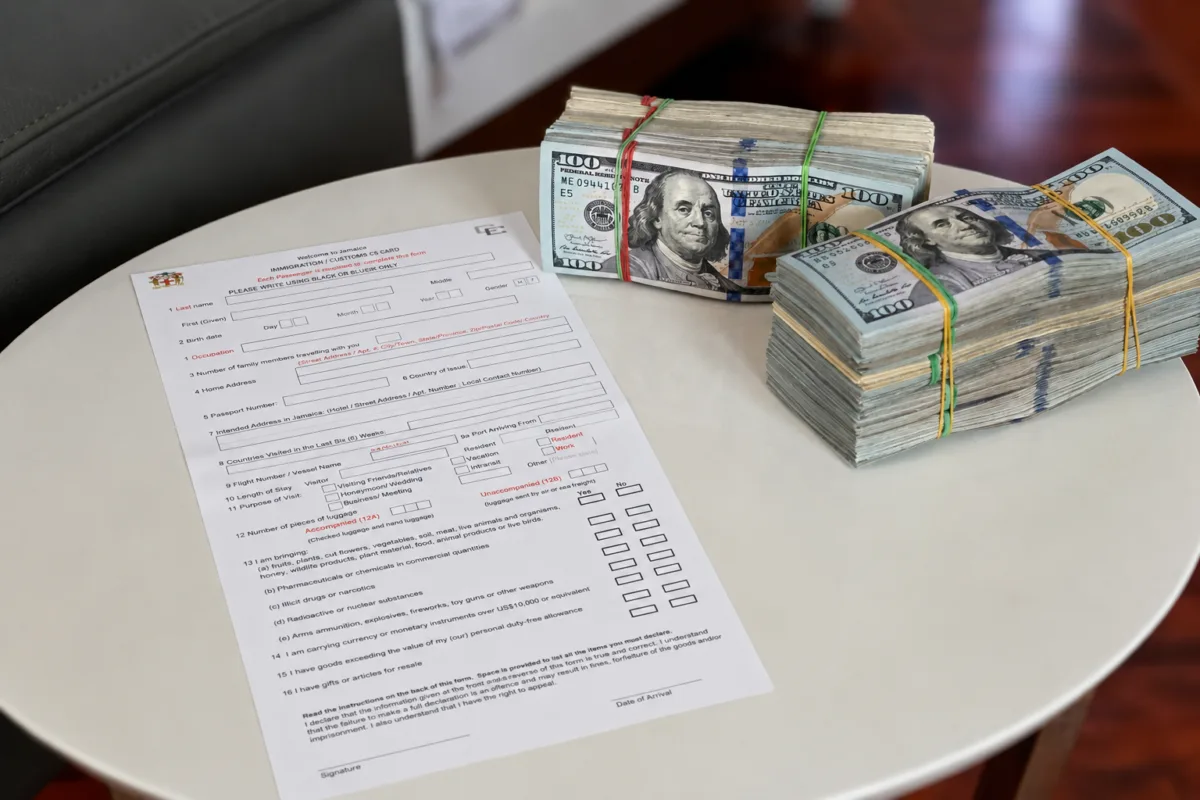
Under the Jamaican Customs Act, there is no maximum limit on how much money you can legally bring into Jamaica.
You can bring $5,000, $50,000, or $500,000. The cash itself is not the crime.
The $10,000 threshold is entirely about disclosure:
- Under US$10,000: No declaration is usually required.
- US$10,000 or more: You should legally declare it on Jamaica’s C5 form before landing. This includes cash, traveler’s cheques, money orders, and similar instruments.
Can family members split the cash?
No. A family traveling together cannot simply divide US$20,000 between two people and assume neither has to declare it. Customs looks at the total amount being carried by the traveling party.
Skip that declaration, and that’s where your legal problems begin. That’s also when your money can be seized.
Why US$10,000 Is Not the Magic Number
On paper, the rule sounds simple: stay under US$10,000 and you usually do not need to declare it. Go over, and you do.
Once you land in Jamaica, things can become complicated.
The US$10,000 threshold is a reporting trigger, not a guarantee that your cash will never be questioned. Customs officers can still ask where the money came from, who it belongs to, and whether you can prove it.
Two Stories of Travelers Who Lost Their Cash (And Why)
The line between walking out into the island sun and sitting in an interrogation room always comes down to a verifiable paper trail, not criminal intent.
The Paperwork Trap: Under US$10,000
“Marcia”, a Jamaican living overseas, arrived with US$8,900 from a traditional “partner” plan (an informal community savings pool). She declared it honestly on her C5 form, yet Customs still seized the funds.
The issue was not the amount. It was the paperwork.
Because the savings came from an informal system, she did not have the kind of documents Customs usually looks for: bank records, withdrawal slips, receipts, or other proof showing where the money came from.
The Concealment Trap (Over $10,000)
A separate case went in the exact opposite direction. A traveler was found carrying more than US$45,000 after declaring only a tiny fraction of it.
Officers found the bulk of the cash concealed inside commercial plastic bottles in her luggage. Because she hid the money and gave conflicting verbal explanations about who actually owned it, the court ordered the entire sum forfeited.
The lesson from both cases is simple: the amount gets Customs’ attention, but your documentation, and your ability to support your story, is what determines whether you keep your money.
How to Pass Through Jamaican Customs Safely With Cash
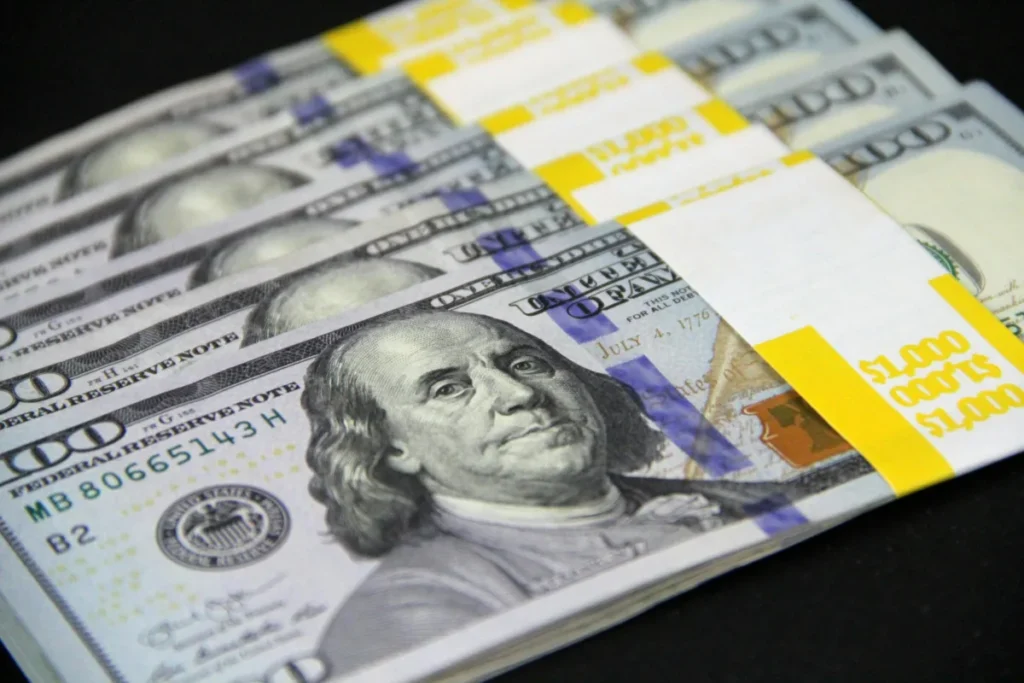
If you are carrying a large amount of cash, you have two risks to balance.
You do not want the money exposed carelessly, but you also do not want it packed in a way that looks hidden from Customs.
There is a difference between keeping cash safe and hiding it, where it looks suspicious.
Carry the Money Securely, Not Secretly
- Keep the money close to you, ideally in your carry-on or personal bag.
- Do not pack cash inside product containers, clothing layers, or unusual hiding spots.
- Do not split the money among relatives or travel companions to avoid the US$10,000 threshold.
- Make sure the amount you declare matches the amount you are carrying.
- Keep the cash easy to access if Customs asks to inspect it.
Bring Proof Before You Fly
Customs cannot verify a handshake deal or family arrangement on the spot. Bring documents that explain where the money came from.
Useful documents may include:
- bank withdrawal slips
- recent bank statements
- sale agreements
- property documents
- business invoices
- receipts
- gift letters
If you cannot clearly show where the money came from, carrying it may not be worth the risk.
Is Carrying Large Cash Still Worth It?
Unless you have a specific reason, I would avoid flying to Jamaica with large amounts of cash.
Not because it is illegal, but because cash creates friction at the airport.
Most visitors will never come close to the declaration threshold. If you are only budgeting for meals, tours, tips, and transport, the better question is how much spending money you actually need for Jamaica.
For property, construction, business, or family obligations, a traceable transfer is usually your best bet.
For more help planning the money side of your trip, see our complete Jamaica Money & Budgeting guide.
